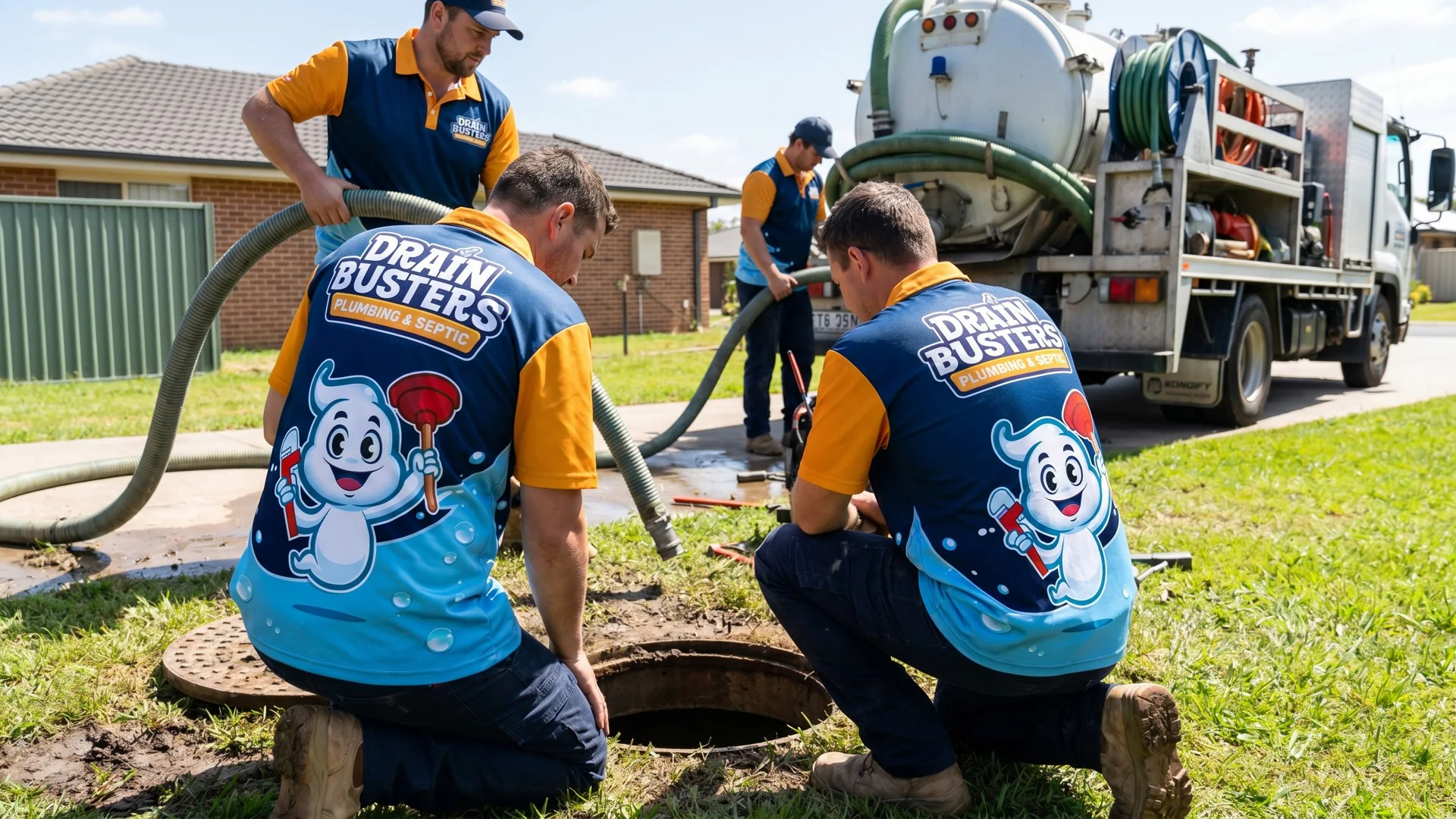
Don’t Wait for a Backup: How to Tell When Your Septic Tank Needs Service
If your home relies on a septic system instead of a city sewer line, routine pumping is essential to keep everything running smoothly. A septic tank that’s overdue for service can lead to slow drains, foul odors, costly repairs, and even health hazards. In this guide, the experts at DrainBusters Plumbing & Septic explain how to recognize the signs that your septic tank needs pumping – and why staying on schedule can save you money and headaches.
- Why Septic Tank Pumping Matters
- Warning Signs Your Septic Tank Is Overdue
- Factors That Affect Pumping Frequency
- What Happens During a Professional Pumping
- How to Avoid Septic Emergencies
Why Septic Tank Pumping Matters
Your septic tank collects wastewater and separates solids from liquids. Over time, the solids (sludge) accumulate at the bottom of the tank while lighter materials (scum) float to the top. When too much sludge builds up, it can overflow into the drain field, clog pipes, and cause backups inside your home. Routine pumping removes these solids, protecting your system and extending its lifespan.
Most tanks need pumping every 3-5 years, but the exact schedule depends on the size of your tank, the number of people in your household, and your water usage habits.
Warning Signs Your Septic Tank Is Overdue
Look out for these common indicators that your septic tank is full or approaching capacity:
1. Slow or Gurgling Drains
If your sinks, showers, or toilets are draining more slowly than usual – or you hear gurgling noises in your pipes – your tank may be nearing capacity.
2. Sewage Odors Indoors or Outside
Persistent foul smells in your home, near the tank, or around the drain field often mean waste has risen too high or your system is stressed.
3. Backups and Overflows
The most obvious and urgent sign: sewage backing up into toilets, tubs, or floor drains. This requires immediate professional service.
4. Lush, Soggy Grass Over the Drain Field
If one area of your yard looks unusually green or wet, it may be absorbing untreated wastewater because your tank is overflowing.
5. It’s Been 3-5 Years Since the Last Pump
Even without visible symptoms, it’s smart to schedule pumping on a regular timeline. Waiting until there’s a problem can cost far more in repairs.
Factors That Affect Pumping Frequency
- Tank Size: Smaller tanks fill up faster.
- Household Size: More people produce more wastewater and solids.
- Water Usage: High-volume habits (long showers, frequent laundry) put more strain on your system.
- Garbage Disposal Use: Adding food waste can double the sludge accumulation rate.
- Additives and Chemicals: Some can disrupt the natural bacteria that break down solids.
What Happens During a Professional Pumping
When you call DrainBusters Plumbing & Septic for septic pumping, our trained technicians:
- Locate and uncover the tank lids.
- Measure sludge and scum levels to assess system health.
- Pump out all liquids and solids using specialized equipment.
- Inspect baffles, filters, and components for wear or damage.
- Provide a maintenance report and recommend your next service date.
How to Avoid Septic Emergencies
- Keep a service log and schedule pumping proactively.
- Spread out laundry and dishwasher use to avoid hydraulic overload.
- Never flush wipes, feminine products, grease, or harsh chemicals.
- Protect your drain field – no heavy vehicles, decks, or trees with deep roots above it.
If your tank is overdue or the warning signs are starting, you can schedule septic service before a backup gets the final word.